My new friend has recently confessed that he did not like poetry. The rest of the day I thought about people and how different their reaction to poetry in general was and is.
What makes those lines that someone strung together stop our hearts?
How do we learn this beauty?
When does the journey start?
I remember my high school days and a young teacher of math. She always struggled with us. With young age cruelty we deliberately ignored her, talked and yelled, walked and giggled. In one of those classes, desperate to restore the order, she took a stand in the middle of the room and suddenly started reciting a poem.
Идут белые снеги
Как по нитке скользя....
She kept reciting, line by line. We froze in awe. It was a poem about philosophy of life. None of us could really relate to that subject. But we were smitten by the beauty of rhythm, the love in her voice, and a discovery of something new in us.
Saturday, March 09, 2013


Friday, March 08, 2013
Poems by e e cummings
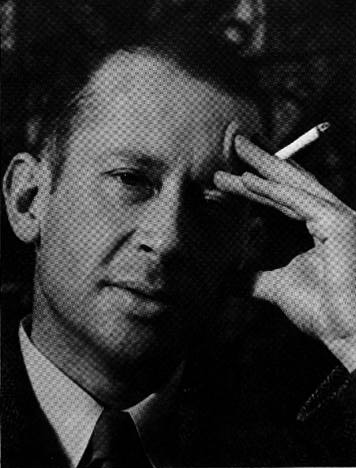
Edward Estlin Cummings (1894-1962) wrote poems in an unusaual way: capital letters in the middle of words, unexpeted line breaks, misplaced punctuation marks, interrupted sentences and even individual words.He signed his poems by writing his name in lower case and without periods.
Here are some of my favourites...
i carry your heart with me
i carry your heart with me(i carry it in
my heart)i am never without it(anywhere
i go you go,my dear; and whatever is done
by only me is your doing,my darling)
i fear
no fate(for you are my fate,my sweet)i want
no world(for beautiful you are my world,my true)
and it's you are whatever a moon has always meant
and whatever a sun will always sing is you
here is the deepest secret nobody knows
(here is the root of the root and the bud of the bud
and the sky of the sky of a tree called life;which grows
higher than the soul can hope or mind can hide)
and this is the wonder that's keeping the stars apart
i carry your heart(i carry it in my heart)
love is a place...
love is a place
& through this place of
love move
(with brightness of peace)
all places
yes is a world
& in this world of
yes live
(skilfully curled)
all worlds
Now i lay(with everywhere around)...
Now i lay(with everywhere around)
me(the great dim deep sound
of rain;and of always and of nowhere)and
what a gently welcoming darkestness--
now i lay me down(in a most steep
more than music)feeling that sunlight is
(life and day are)only loaned:whereas
night is given(night and death and the rain
are given;and given is how beautifully snow)
now i lay me down to dream of(nothing
i or any somebody or you
can begin to begin to imagine)
something which nobody may keep.
now i lay me down to dream of Spring
Monday, November 19, 2012
Lives of the Artists (Calvin Tomkins)

It is a compilation of contemporary artists profiles from The New Yorker. Calvin Tomkins has been writing for the magazine for over three decades.
I only read profiles of Damien Hirst, Cindy Sherman, Richard Serra, Maurizio Cattelan, Jasper Johns, and Jeff Koons. Would read it again. I will search for more books by Tomkins.
Some exerpts from the book I want to have handy:
(Jasper Johns profile )
"... The four men shared certain ideas and ambitions which would soon become much more influential than they were then: ideas of an art based not on self-expression or heroic individualism or some concept of the sublime but on a field of aesthetic possibilities reachable through nontraditional means such as chance, experimentation, and the unapologetic embrace of everyday experience..."
"... why he quit painting... Duchamp has told the interviewer that it was "because of dealers and money and various reasons... And then he looked up and said," But you know, it wasn't like that. It's like you break a leg - you didn't mean to do it." What Johns loved about this, I think, was Duchamp's denial of consious intention as a ruling principle. It coincided with his own feeling that an artist does what he is helpless not to do. "
" Marcel Duchamp, too, believed that the viewer was an essential part of the creative process. The artist initiated the creative act, he said, but it was up to the viewer to complete it, by interpreting its meaning and its place in art history.."
The Andy Warhol Diaries

Sunday, September 16, 2012
Painting Below Zero ( James Rosenquist)

Subscribe to:
Posts (Atom)